Listening skills and talking about mental health
Listening skills
Listening is a skill we often forget to use but we need to develop this skill if we want to help our family members with their wellbeing.
Helpful sites:
🔗Parent talk – Listening skills
YOUNGMINDs – 🔗How to be a good listener

🔗R U OK outlines the warning signs to look out for and four simple steps to help you have a conversation with a family member about their wellbeing.
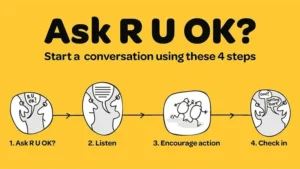
How to start a conversation about mental health?
Creating the right space to talk
Before starting a conversation, it can help to think about:
- Is the setting right?
- Is this the best time?
Sometimes talking side-by-side rather than face-to-face feels less intense – for example while walking the dog, driving in the car, or doing something together.
How to start the conversation
You do not need perfect words. Simple, gentle openings often work best:
- “How are you?”
- “I’ve noticed you seem a bit down/upset/angry today – do you want to talk?”
Try to ask open questions that invite more than a yes/no answer: “Tell me what’s worrying you about X” rather than “Is X worrying you?”
Sometimes sharing a little of your own feelings can help them open up: “My day’s been really tough because… What has made your day not so good?”
While they’re talking:
- Listen without interrupting or rushing to fix things.
- Acknowledge their feelings: “That sounds really hard.”
- Ask what they need from you: “Do you want advice / help, or just someone to listen?”
- Remember, it might take a few invitations before they are ready to talk – even if they do not want to talk now, keep gently checking in.
Talking to teenagers
 Parent Club Scot leaflet – How to talk to your teen
Some helpful sites
Children First – 🔗Children First Support line | Children First
SAMH – 🔗Parents and carers
YOUNGMINDs – Including a parent helpline – 🔗We can support you
Better health – 🔗every mind matters
📷Clips
UNICEF – How to talk to your kids about mental health?
See Me – Speaking to your children about a mental health problem.